
The True Cost of Missed or Late Shipments
The cost of late delivery reaches far beyond a missed deadline. When freight doesn’t arrive on time, production schedules shift, labor stalls, customer expectations change, and long-term relationships can weaken. One late shipment can trigger delays that affect profit margins, internal workflow, and customer confidence.
Below, we’ll explain the real cost of late shipments and how the right freight partner helps prevent them from happening in the first place.
Why On-Time Delivery Matters in Today’s Supply Chain
Timing drives everything in business. Production runs are scheduled around arrival windows, meaning distribution centers rely on freight arriving in sequence. Retail shelves depend on replenishment before stock runs out. When a shipment arrives late, it doesn’t just show up at a different delivery date; it changes how your business operates that day.
Many companies think of a delay as a simple inconvenience. But in a connected supply chain, a delay can stop work entirely. A missing part can hold up a full production line. A delayed load can block outbound orders. A late delivery service can reduce customer satisfaction at the exact moment your brand is being evaluated.
Delivery timing drives momentum. Once it slips, the effects show up everywhere.
The Hidden Business Costs of Late Shipments
Late shipments don’t just cost extra money on a shipping invoice. They influence operations, staffing, customer perception, and revenue performance. The impacts are often spread across multiple departments, so the real cost can be easy to overlook.
Below is a breakdown of how those late delivery costs show up.
Production Disruptions and Downtime
If your production team doesn’t have what they need when they need it, machines sit idle. Workers wait. Supervisors adjust schedules. Productivity drops. When a shipment arrives late, work can’t move forward as planned.
Even one delayed truckload can stop an entire manufacturing run. And the longer the pause, the more expensive it becomes.
Increased Labor and Rescheduling Costs
Once schedules shift, labor hours don’t shift cleanly. Production teams, warehouse staff, drivers, and support employees all feel the impact.
Rescheduling typically triggers:
- Overtime wages to make up lost output.
- Extended shifts to compress timelines back into place.
- Project sequencing work to reorganize workflows.
- Weekend or after-hours resets that strain staffing and morale.
A missed delivery also increases administrative labor. Managers spend time calling, reassigning work, and reorganizing priorities. What started as a freight issue quickly turns into a people and planning challenge.
These added costs are rarely visible on the freight bill, but they show up in payroll and operational fatigue.
Inventory Misalignment
Late shipments create shortages, but repeated uncertainty can cause businesses to overstock as a buffer. That ties up cash, increases distribution center space needs, and makes planning less predictable.
Late shipments can create:
- Stockouts, forcing production delays or lost sales.
- Emergency purchasing, which increases shipping costs.
- Over-ordering to act as a safety buffer, tying up working capital.
- Crowded warehouse space, increasing storage and handling needs.
A pattern of late deliveries can push businesses into keeping more inventory “just in case.” This approach reduces agility and locks capital into storage instead of growth.
Customer Frustration and Service Strain
Customers expect their orders to arrive on time. When a delivery delay happens, the customer experience shifts immediately.
Your customer-facing teams absorb the impact:
- They answer more phone calls asking for status updates.
- They send follow-up messages to reassure customers.
- They try to recover confidence on the fly.
Meanwhile, customers wait longer. They may question the reliability of your processes. A single delayed delivery can lead to disappointment, uncertainty, or the perception that your business lacks control over its operations.
This is especially stressful when the customer already received a confirmation email stating that the order had shipped.
Your customer service team becomes the shield, but they can only do so much if late shipments keep happening.
Brand Reputation and Lost Business
Reliability is part of your identity as a supplier. Customers rarely remember every shipment that arrives on time. They remember the one that does not.
Patterns that follow late shipments:
- Buyers reconsider long-term agreements.
- Negative reviews begin to influence new buyers.
- A potential customer may choose a competitor instead.
- Returning business slows, lowering customer retention.
Once doubt forms, it takes significantly more effort to restore confidence than it would have taken to maintain it through consistent on-time delivery. The damage is not always immediate. It appears gradually through lower reorder rates, fewer referrals, and shrinking customer loyalty.
Consistency supports trust. Inconsistency erodes it.
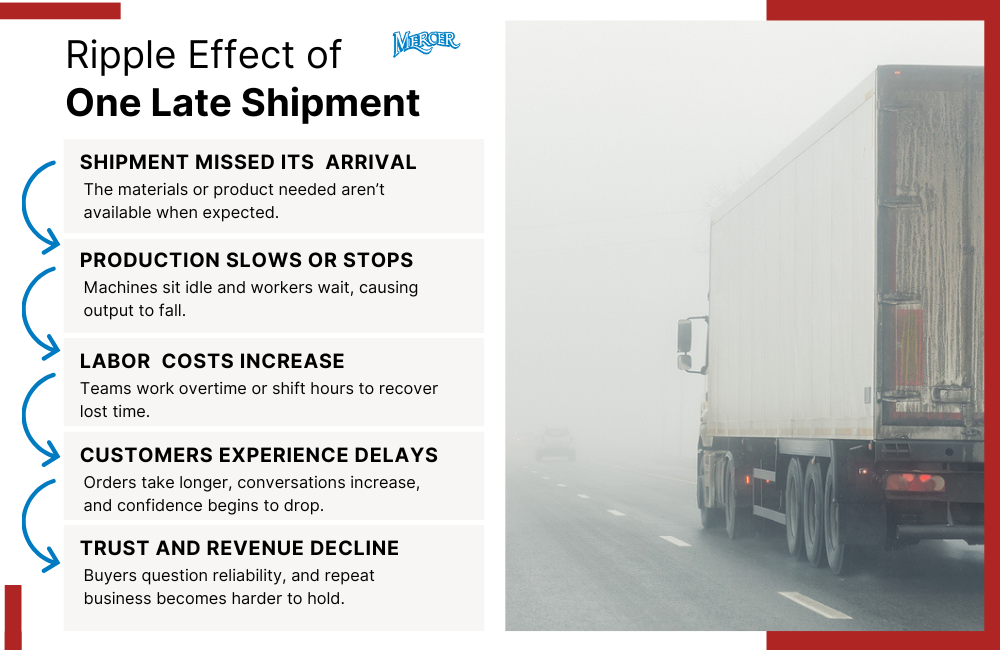
How One Late Shipment Creates Compounding Costs
The total impact is rarely one line item. It’s a cascading effect that touches multiple teams and long-term business performance.
| Cost Impact Area | What Happens | Example Outcome |
|---|---|---|
| Production Downtime | Work stalls while waiting on materials | Idle labor + lost output per hour |
| Rescheduling Labor | Teams shift to catch up later | Overtime and extended shift pay |
| Inventory Disruptions | Either shortages or overstocking responses | Holding costs or lost sales |
| Customer Experience Issues | Clients must be updated and reassured | Support strain + damaged trust |
| Brand & Sales Impact | Buyers question reliability | Lost opportunities and lower customer lifetime value |
What Causes Late Freight Deliveries?
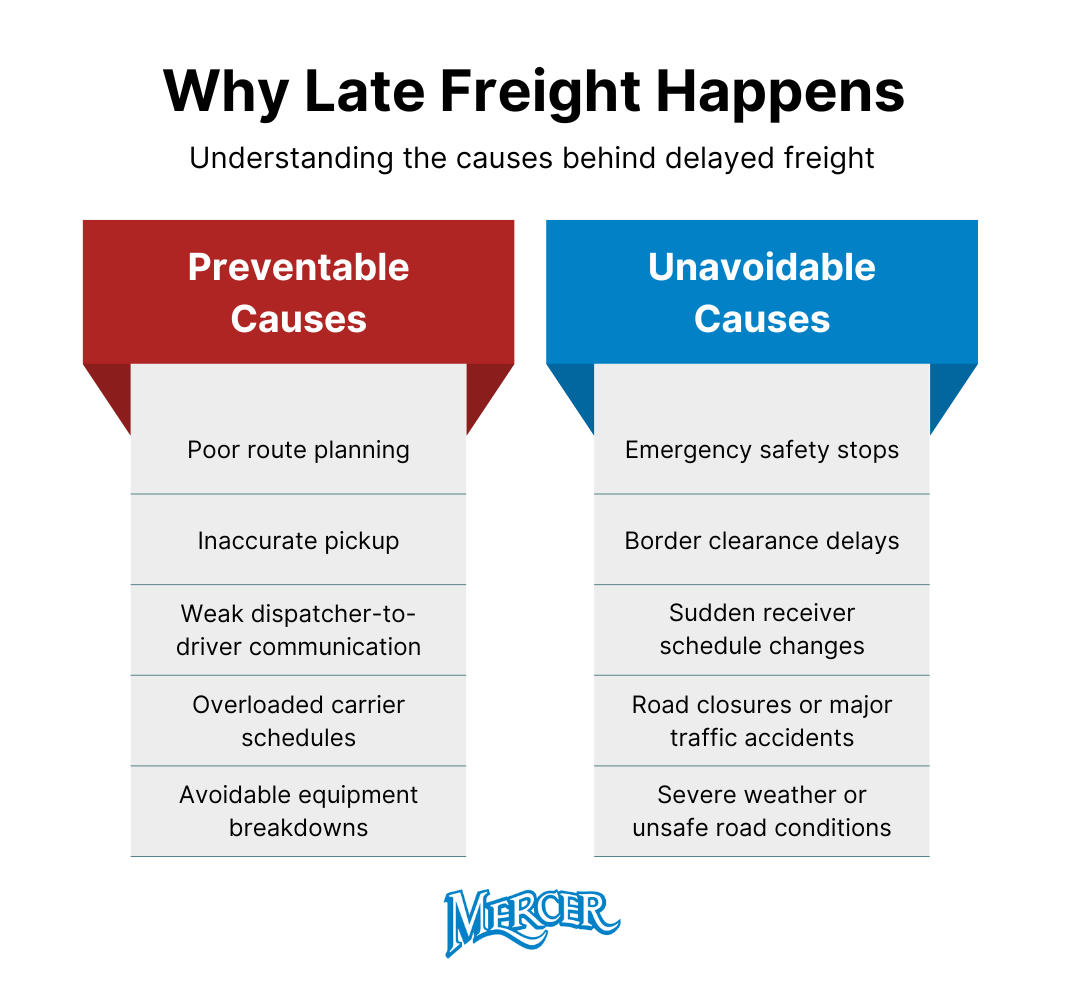
There are many reasons delivery delays occur, but most fall into two categories: preventable and unavoidable. Unavoidable situations (weather or road closures) can happen, but a skilled carrier plans for these variables. Preventable issues often happen when freight partners lack the structure or experience needed for reliable operations.
Common causes of late deliveries include:
- Poor communication between dispatch and driver
- Lack of network capacity to adjust when plans change
- Weak route optimization or planning tools
- Drivers without proper support on the road
- Carriers stretching resources too thin during peak demand
- Unclear load instructions or missing paperwork
A reliable shipping company reduces preventable delays by planning realistically, communicating clearly, and supporting drivers with real-time guidance.
How to Calculate the Cost of a Late Delivery
Many companies feel the frustration of a late shipment but don’t quantify what it costs. To evaluate the impact clearly, gather numbers from across affected departments.
Calculate the Cost Using This Model
| Cost Category | Formula | Example Calculation |
|---|---|---|
| Production Downtime | (Value of output per hour × hours delayed) | $18,500/hour × 2 hours = $37,000 |
| Labor Rescheduling | (Extra labor hours × hourly rate) | 12 hours × $42/hr = $504 |
| Replacement Freight | Rush trucking or air freight charge | $1,200 |
| Lost Orders | (# of missed orders × average revenue per order) | 3 × $7,500 = $22,500 |
Even conservative numbers often show that one late load can cost tens of thousands of dollars. This is why on-time delivery isn’t just a logistics goal but a profitability factor.
What to Look for in a Reliable Freight Partner
A dependable freight partner doesn’t just move freight from point A to point B. They protect your workflow and customer relationships by planning carefully, communicating clearly, and responding quickly when things change.
When evaluating carriers, look for:
Experienced Drivers and Carrier Network
Familiarity with loading environments, freight types, and securement requirements reduces avoidable issues. Drivers who understand dock expectations and industry-specific freight move more confidently and safely, which supports predictable schedules.
Transparent Communication and Real-Time Updates
You should not have to send multiple emails to find out where a truck is. A reliable freight partner provides status updates before you have to ask, especially during time-sensitive moves. Visibility allows your team to manage workflow, staffing, and customer communication without scrambling for information.
Consistency Over Promises
The carrier should commit to realistic delivery windows and stick to them. It is better to have a partner who quotes achievable delivery time than one who overpromises and arrives late. Predictability supports planning, and planning supports profit.
Ability to Adapt When Situations Shift
If a delivery attempt fails or a receiver changes hours, the carrier should present clear alternatives. The goal is not to avoid challenges but to handle them in motion without disrupting your schedule. Adaptability supports continuity and reduces stress across your team.
Safety and Equipment Standards
Regular equipment checks help prevent breakdowns, missed pick-ups, and delays on the road. A carrier that invests in safe vehicles and trained operators is far more likely to deliver consistent timing. Safety practices support dependability in ways that are often invisible but always felt.
Why Many Companies Choose Mercer Transportation
Mercer Transportation has served United States shippers for more than four decades. Our company operates with a strong focus on professional driving, dependable communication, and clear planning. Mercer supports its network of experienced owner-operators, giving them the resources they need to keep freight moving on schedule.
Shippers often choose Mercer because:
- Experienced, professional drivers handle specialized freight every day.
- Real human communication, meaning you know who to call and who is responsible for your freight.
- Planning and scheduling are based on realistic timing, not just what looks promising on paper.
- Strong support systems help loads move with fewer obstacles.
- A long-standing culture based on accountability, respect, and service.
Mercer’s approach doesn’t just prevent delayed shipments; it supports the entire shipping relationship.
Reliability Protects Your Business
A delayed delivery affects more than freight arrival. It impacts production, labor, and customer confidence. Consistent on-time performance protects margins and relationships.
Working with a carrier that values dependable timing supports steady delivery operations and planning. If you’d like to maintain consistent, timely delivery, reach out. Mercer Transportation is ready to help keep your freight moving with confidence. Reach out today!