
How Transborder Freight Differs from Domestic Shipping
Shipping goods from one place to another seems straightforward at first. You pack your shipment, choose a carrier, and send it on its way. But what happens when that shipment needs to leave the United States and move into Canada or Mexico? That’s where transborder freight comes in.
What Is Transborder Freight?
Transborder freight is any shipment that crosses a national border. For U.S.-based companies, this usually means moving freight to or from Canada or Mexico. Unlike domestic shipping, which stays within the country, transborder moves involve customs, added documentation, and a few extra steps to make sure the shipment is legally cleared into another nation.
However, transborder freight is still about one simple thing: Moving your goods safely from point A to point B – even when B is across a border.
When Businesses Use Transborder Freight
Companies choose transborder freight for many reasons, including:
- Working with suppliers or manufacturers in another country
- Expanding into new markets
- Moving equipment or machinery between facilities
- Shipping products to customers or distribution centers outside the U.S.
- Handling seasonal demand where cross-border sourcing becomes beneficial
If your supply chain touches North America, chances are that sooner or later you’ll need transborder freight services.
Common Types of Transborder Freight
Because industries vary widely, so do the types of freight moving across borders. A few common examples include:
- Flatbed loads: Lumber, building materials, steel, machinery
- Heavy equipment: Construction, industrial, or agricultural equipment
- Dry van freight: Packaged goods, palletized items, retail inventory
- Oversized loads: Large or unusual cargo requiring special equipment
- Specialized goods: Items requiring specific handling or secure transport
Transborder shipping supports everything from manufacturing to retail to energy operations.
Why Transborder Shipping Matters
Cross-border shipping plays a major role in the North American economy. It helps companies:
- Reach new customers
- Access materials and suppliers across the continent
- Maintain flexible and resilient supply chains
- Support expansion without opening a new facility
For many businesses, cross-border freight is simply a natural extension of their current logistics strategy.
How Transborder Freight Works (Step-by-Step)
While domestic shipping is usually a direct process, transborder moves have a few extra steps. These steps keep shipments legal, organized, and traceable as they enter a new country.
Here’s a simple overview of how the process typically works.
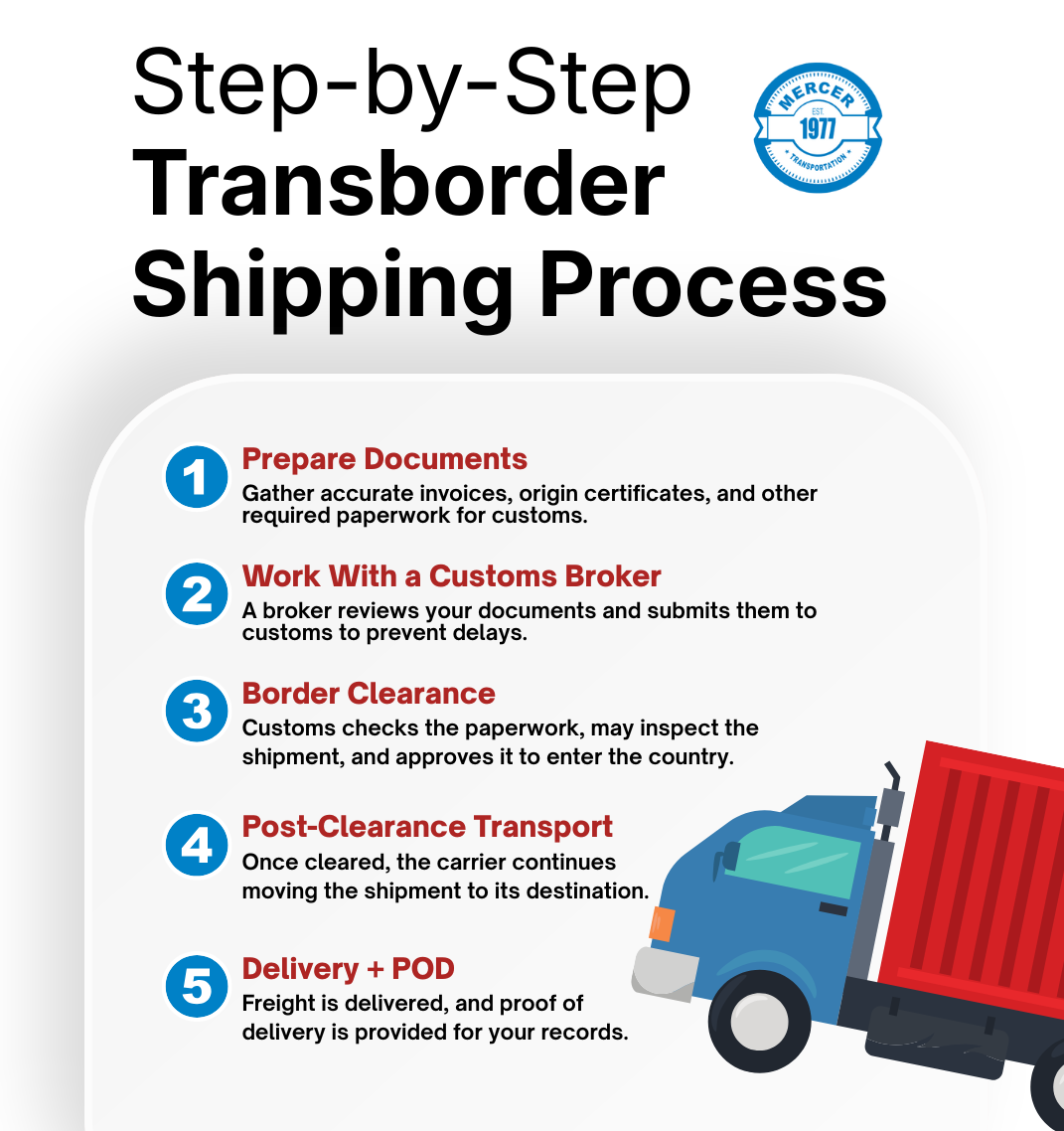
Step 1: Preparing the Required Documents
Crossing a border requires paperwork that confirms what you’re shipping, who you’re shipping it to, and where it’s coming from. Common documents include:
- Commercial Invoice: A detailed list of the goods being shipped
- Bill of Lading (BOL): The contract between shipper and carrier
- Certificate of Origin: Shows where the product was made
- Other Required Documents: Depending on the cargo or trade agreements
Accuracy matters. Small mistakes can lead to delays at the border.
Step 2: Working With a Customs Broker
A customs broker is a licensed professional who helps your freight clear customs requirements. They:
- File required forms
- Calculate duties and taxes (if applicable)
- Communicate with customs officials
- Help prevent delays by catching mistakes early
Some companies already have a preferred broker. Others rely on their carrier to help facilitate the process. Many experienced carriers work closely with brokers every day.
Step 3: Border Clearance
When your shipment reaches the border, it must be reviewed and approved before entering the next country. This includes:
- Document checks
- Security inspections (when required)
- Duty and tax assessments
- Verification of carrier credentials
While this step may sound complicated, a prepared shipment usually moves through efficiently, especially when partnering with a knowledgeable carrier who understands compliance requirements.
Step 4: Transport After Clearance
Once customs clears your freight, the carrier continues the trip to the final destination. This could be a warehouse, jobsite, customer facility, or distribution center.
For northbound or southbound shipments, this final leg is often similar to a domestic delivery.
Step 5: Delivery and Proof of Delivery
Just like any shipment, the final step is unloading and confirming delivery. Your carrier or broker provides a proof of delivery (POD) for your records.
When handled correctly, the entire transborder process feels like an organized extension of domestic shipping, just with a few extra checkpoints.
Transborder vs. Domestic Shipping: What’s the Difference?
Both types of shipping move freight from one place to another, but the process is not the same. Here’s a simple breakdown.
Documentation Requirements
- Domestic Shipping: Usually just a Bill of Lading.
- Transborder Shipping: Requires multiple documents and verification.
Border Clearance
- Domestic Shipping: No customs brokerage involvement.
- Transborder Shipping: Must pass through customs clearance, which includes inspections and paperwork reviews at the border station.
Transit Time
- Domestic Shipping: Shipment moves directly to the destination.
- Transborder Shipping: Border processing can add time, especially during peak traffic or if documents contain errors.
Regulations
- Domestic Shipping: Follows U.S. Department of Transportation rules.
- Transborder Shipping: Must comply with the regulatory requirements of both countries involved.
Carrier Experience
- Domestic Carriers: Not all have approval or expertise for border crossings.
- Transborder Carriers: Must meet customs requirements and know the proper processes.
Challenges in Transborder Shipping (and How to Avoid Them)
Cross-border logistics doesn’t need to be complicated, but a few common issues can slow things down. Here are the challenges most businesses face and how to prevent them.
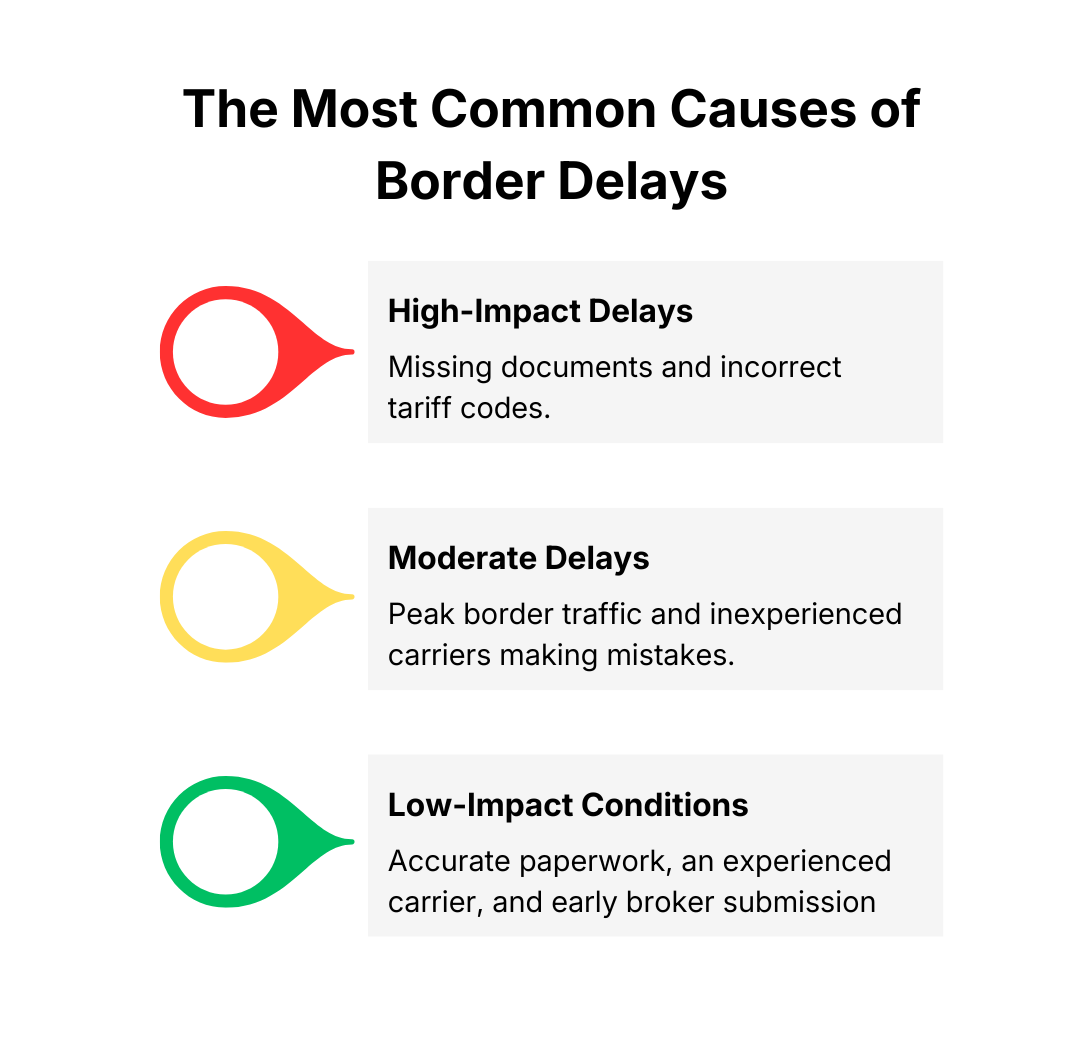
1. Incorrect or incomplete paperwork
Mistakes in invoices or missing documents can delay customs clearance.
How to avoid it: Double-check paperwork and use a carrier familiar with many years of experience in cross-border requirements.
2. Delays at the border
High truck traffic periods or missing documents can slow processing.
How to avoid it: Plan ahead, use a reliable carrier, and submit documents early through your customs broker.
3. Wrong tariff classification
Customs uses classification codes to assess duties. Incorrect codes can trigger delays or reprocessing.
How to avoid it: Let a customs broker classify goods and verify accuracy.
4. Carrier inexperience
Some carriers don’t specialize in cross-border freight, leading to extra delays.
How to avoid it: Choose a carrier with proven transborder capability and established customs processes.
Benefits of Working With an Experienced Transborder Carrier
A knowledgeable carrier makes the entire process easier. Here’s what businesses gain when they don’t have to handle everything alone.
Faster, smoother border crossings
Experienced carriers know the requirements, the paperwork, and the most efficient routes for crossing the Mexico border and the Canada border.
Fewer delays
Most issues happen when documents are wrong or incomplete. Experience reduces risk.
Access to the right transportation modes
Flatbeds, heavy haul trailers, dry vans, and specialized equipment are often needed for cross-border moves, especially for industrial freight.
Consistent communication
Reliable updates and real-time visibility keep shippers informed throughout the trip, especially when crossing an international border.
Better planning for repeat shipments
If your business ships regularly into Canada or Mexico, a trusted transborder carrier becomes an essential partner in supply chain planning.
How Mercer Transportation Supports Transborder Shipping
Mercer Transportation has decades of experience serving shippers across all of North America. While many carriers focus only on domestic freight, Mercer supports both domestic and cross-border needs with a strong, established network.
Cross-Border Shipping Into Canada
Mercer handles freight moves into Canada with a reliable and experienced team. Our company regularly moves:
- Flatbed freight
- Machinery
- Building materials
- Dry van goods
- Oversized loads
Mercer’s long history with Canadian shipments means customers get a smooth process, organized paperwork flow, and dependable communication from pickup through delivery.
Border-Service Freight Into Mexico
Shipments bound for Mexico often require a different structure. Mercer provides freight transport to the U.S.–Mexico border and coordination with trusted partners for freight transfer. This approach gives businesses a secure and consistent way to move their freight into Mexico without navigating the full complexity of direct cross-border transportation.
Transborder Shipping Solutions
If you need help moving freight across borders or want to explore how transborder shipping fits into your logistics plans, Mercer is ready to help keep your business moving.