
How Many Pallets Fit in a Truck?
Knowing how many pallets fit in a truck is one of the first steps to planning an efficient shipment. The short answer: a standard 53-foot dry van trailer holds 26 pallets single-stacked or up to 52 pallets double-stacked. But the actual number depends on your trailer size, pallet dimensions, cargo weight, and loading technique.
Standard Pallet Sizes and Dimensions
Before calculating how many pallets fit in a truck, you need to know what size pallets you’re shipping. Pallet dimensions vary, and even a few inches can change your total capacity.
The GMA Pallet (48″ x 40″)
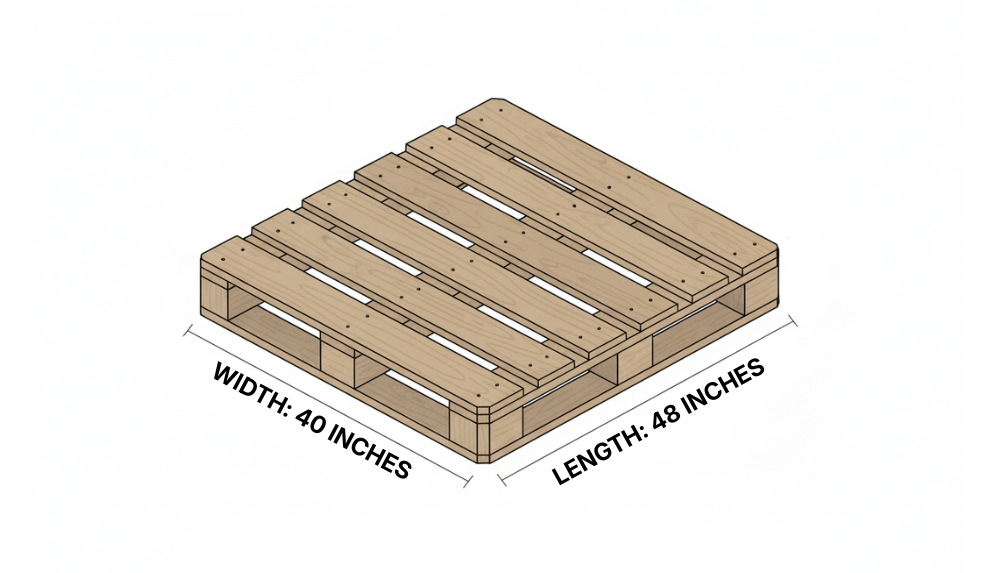
The Grocery Manufacturers Association (GMA) pallet is the most common pallet size in North America. Measuring 48 inches long by 40 inches wide, this standard pallet accounts for roughly 30% of all wooden pallets produced in the United States, according to the National Wooden Pallet & Container Association. You’ll find GMA pallets in retail, grocery, manufacturing, and general freight shipping.
Most pallet capacity calculations assume you’re using this standard size. If your pallets are different, you’ll need to adjust your numbers accordingly.
Other Common Pallet Sizes
While the 48″ x 40″ pallet dominates the trucking industry, other sizes are common depending on your goods and shipping destination:
| Pallet Type | Dimensions (L × W) | Common Uses |
|---|---|---|
| GMA / Grocery | 48" × 40" | Retail, grocery, general freight |
| ISO / European | 47.24" × 39.37" | International shipping |
| Block Pallet | 48" × 48" | Drums, barrels, industrial goods |
| Half Pallet | 48" × 20" | Retail displays, smaller loads |
Wooden pallets remain the industry standard due to their low cost and availability. When planning your shipment, confirm your exact pallet dimensions (including height when loaded) before calculating how many will fit in your trailer.
Pallet Capacity by Trailer Type
Different trailers have different interior dimensions, which directly affects the number of pallets you can fit. Below is a breakdown of the most common trailer types used for palletized freight.
53-Foot Dry Van Trailer
The 53-foot dry van trailer is the workhorse of full truckload shipping in North America. With interior dimensions of approximately 53 feet long, 8 feet 6 inches wide, and 9 feet tall, this trailer offers the most cargo space for palletized goods.
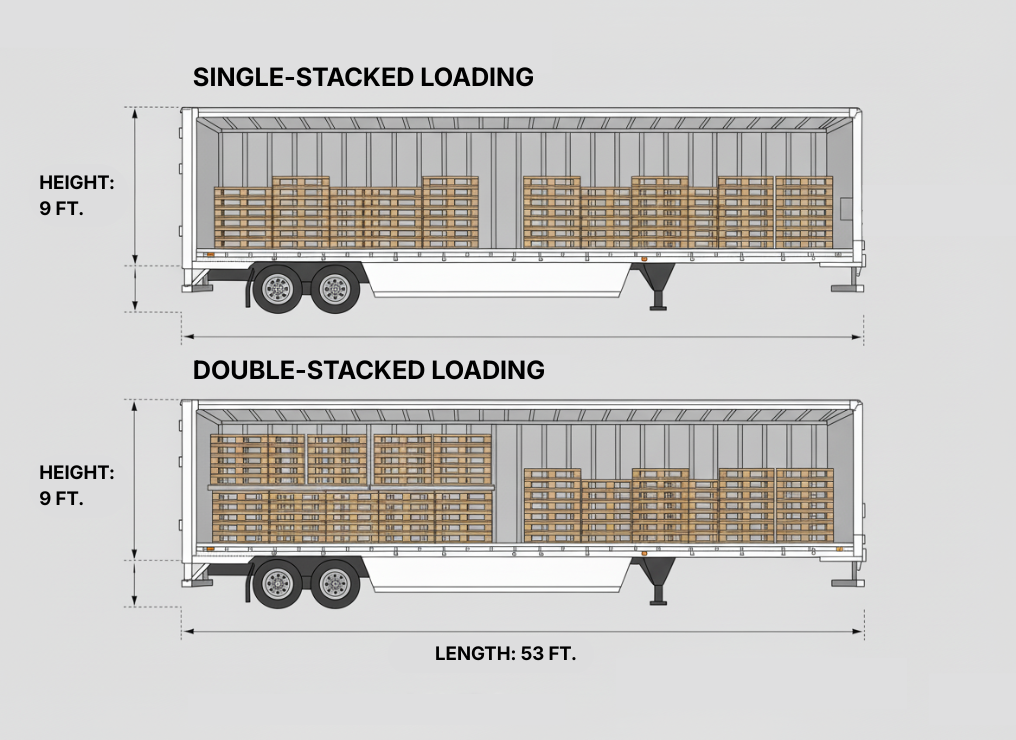
Pallet capacity for a 53-foot trailer:
- Single-stacked: 26 standard pallets (48″ x 40″)
- Double-stacked: Up to 52 pallets
To achieve 26 pallets on the floor, loaders typically arrange them in two rows, placing pallets lengthwise along the trailer walls (40-inch side facing out) with enough room for 13 pallets per row. This straight loading method is the most common approach for standard-sized pallets.
Mercer Transportation operates a large fleet of dry van trailers to handle full truckload shipments of palletized freight.
48-Foot Trailer
The 48-foot trailer is slightly smaller but still widely used, particularly for regional hauls or where local regulations restrict trailer length. Interior dimensions run approximately 48 feet long, 8 feet 6 inches wide, and 9 feet tall.
Pallet capacity for a 48-foot trailer:
- Single-stacked: 24 standard pallets
- Double-stacked: Up to 48 pallets
You lose two floor positions compared to a 53-foot trailer, but the loading technique and pallet arrangement remain the same.
40-Foot Container
The 40-foot container is common in intermodal and international shipping. These containers have interior dimensions of approximately 39 feet 5 inches long, 7 feet 8 inches wide, and 7 feet 9 inches tall. The narrower width is the biggest difference because you lose several inches compared to a dry van trailer.
Pallet capacity for a 40-foot container:
- Single-stacked: 18-20 standard pallets
- Double-stacked: 36-40 pallets
The reduced interior width means pallets may need to be turned or arranged differently to maximize available space. If you’re shipping internationally, confirm your container’s exact dimensions before finalizing your pallet count.
26-Foot Box Truck
The 26-foot box truck is a popular choice for local deliveries, smaller shipments, and last-mile logistics. Interior dimensions measure approximately 26 feet long, 8 feet 4 inches wide, and 8 feet tall.
Pallet capacity for a 26-foot box truck:
- Single-stacked: 12 standard pallets
- Double-stacked: Up to 24 pallets
Box trucks offer less loading space but provide flexibility for deliveries that don’t require a full 53-foot trailer.
Pallet Capacity by Trailer Type
| Trailer Type | Interior Length | Pallets (Single-Stacked) | Pallets (Double-Stacked) |
|---|---|---|---|
| 53-foot dry van | 53′ | 26 | 52 |
| 48-foot trailer | 48′ | 24 | 48 |
| 40-foot container | 39’5" | 18–20 | 36–40 |
| 26-foot box truck | 26′ | 12 | 24 |
Need Help Planning Your Pallet Shipment?
Our team can help you determine the right trailer size and configuration for your freight.
Factors That Affect Pallet Capacity
The numbers above assume ideal conditions with standard pallets and stackable cargo. However, there are several factors that can reduce (or occasionally increase) how many pallets actually fit in your truck.
Pallet Size and Orientation
If your pallets are larger or smaller than the standard 48″ x 40″, your capacity will change. A 48″ x 48″ block pallet takes up more floor space, reducing the number you can fit. Smaller pallets may allow you to squeeze in additional units.
Pallet orientation also matters. Straight loading (where all pallets face the same direction) is the most common method. However, some loads benefit from turned or pinwheel loading patterns that rotate pallets to fill gaps. The best approach depends on your specific pallet size and trailer dimensions.
For non-standard-sized pallets, manual calculation is often necessary. Measure your pallet’s exact dimensions and compare them to your trailer’s interior dimensions to determine how many floor positions you have.
Weight Limits
Every truck has a maximum weight it can legally haul. For most over-the-road trucks, the limit is approximately 45,000 pounds of cargo (after accounting for the weight of the truck, trailer, and driver). This means heavy goods may “weigh out” before you fill the available space.
Consider these weight factors when planning your load:
- Empty pallet weight: Wooden pallets typically weigh 30-70 pounds each
- Loaded pallet weight: The combined weight of the pallet plus your goods
- Total cargo weight: Must stay under legal limits, even if space remains
If you’re shipping heavy materials like machinery, metal parts, or liquids, you may only be able to load a fraction of the trailer’s pallet capacity before hitting the weight limit.
Cargo Height and Stackability
Double-stacking pallets can double your capacity, but only if your cargo allows it. Not all goods can be safely stacked.
Consider whether your products are:
- Fragile: Glass, electronics, or delicate items may not tolerate weight on top
- Irregularly shaped: Items that don’t sit flat make poor bases for stacking
- Top-heavy: Unbalanced loads can shift during transit
- Already at height limits: Loaded pallets must fit within the trailer’s vertical cargo space (typically 8-9 feet)
If your goods can’t be double-stacked, your pallet capacity is limited to floor positions only.
Loading Technique and Equipment
How pallets are loaded affects both capacity and safety. Professional loaders understand how to arrange pallets to maximize trailer space while preventing shifting during transit.
Equipment also plays a role. Pallet jacks and pallet trucks need room to maneuver, which can affect how tightly pallets are positioned. In some cases, leaving a few inches between pallets is necessary for safe loading and unloading.

How to Calculate Pallet Capacity for Your Shipment
If you’re working with non-standard pallets or an unfamiliar trailer, here’s how to calculate your pallet capacity:
Step 1: Know your pallet dimensions.
Measure length, width, and height (when loaded with your goods).
Step 2: Know your trailer’s interior dimensions.
Get the exact length, width, and height of the loading space.
Step 3: Calculate floor positions.
Divide the trailer width by your pallet width to see how many fit side-by-side. Divide the trailer length by your pallet length to see how many fit front-to-back. Multiply these numbers for your single-stacked capacity.
Step 4: Determine if double-stacking is possible.
Check that two loaded pallets stacked won’t exceed the trailer height. Verify the total weight stays under legal limits. Confirm your cargo can handle stacking.
Example calculation for a 53-foot dry van with standard pallets:
- Trailer width (102″) ÷ pallet width (40″) = 2.5 → 2 pallets across
- Trailer length (636″) ÷ pallet length (48″) = 13.25 → 13 pallets deep
- 2 x 13 = 26 pallets single-stacked
When the math gets complicated or the stakes are high, working with an experienced carrier saves time and prevents costly mistakes.
Choosing the Right Trailer for Your Pallet Shipment
Selecting the right trailer depends on how many pallets you’re shipping, how much they weigh, and where they’re going.
Full truckload shipping makes the most sense when you have enough pallets to fill most of a trailer. If you’re shipping 20+ standard pallets, a 53-foot dry van is typically your most cost-effective option. You pay for the entire trailer, but you’re not sharing space with other shippers’ freight.
Dry van trailers are the standard choice for palletized goods because they protect your shipment from weather, dust, and road debris. The enclosed trailer space keeps your products secure from loading dock to destination.
For smaller shipments (say, 10 pallets or fewer) you might consider LTL (less-than-truckload) options. However, many shippers find that once they’re moving 12-15+ pallets regularly, full truckload service offers better value and faster transit times.
Mercer Transportation offers full-truckload services with a fleet built to handle palletized freight of all types. Our equipment options include dry vans, flatbeds, and specialized trailers to match your shipping needs.
Why Work with an Experienced Carrier
Loading efficiency directly affects your shipping costs. A carrier that understands how to maximize pallet capacity, while protecting your goods and staying within weight limits, can save you money on every shipment.
Mercer Transportation brings decades of freight shipping experience to every load. We’ve built long-term relationships with customers who trust us to move their freight safely and on time. Whether you’re shipping a single full truckload or need ongoing freight management, our team can help you find the right solution.
When you’re ready to ship, Mercer Transportation is here to help. Contact our team to discuss your pallet shipping needs orrequest a quote for your next full truckload shipment.
Ready to Ship Your Pallets?
Mercer Transportation has the dry van capacity and expertise to move your palletized freight safely and on time.